



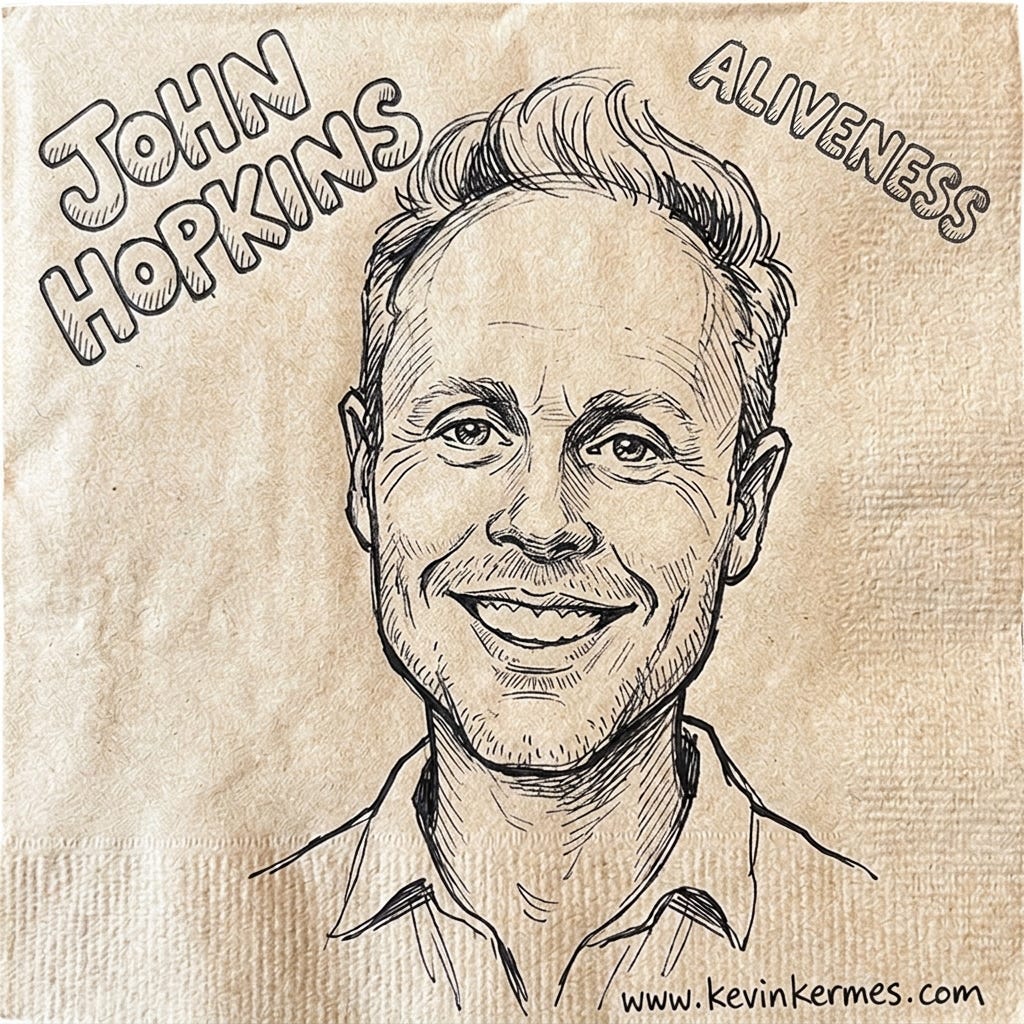
John Hopkins, who goes by Hoppy, writes Aliveness.
He’s a former CEO and creative director who directed commercials and feature films and then ran a drone art company staging aerial light shows, until panic attacks in his mid-forties took his life apart.
He trained as a soul midwife, sitting with people at the end of their lives, and calls himself a “druidic bard.”
Hoppy reverse engineered his life from how he wanted to feel at ninety, sold the house, and now writes a simple practice for living fully before our time runs out.
His tagline: stop drifting and start living the life you keep postponing. His recurring line: when we stop avoiding death, we start living fully.
With that, I give you John Hopkins.
Your Famous Last Words series keeps company with Mary Oliver and Bob Marley. Who else lives in your creative family tree? The writers, teachers, or ancestors you feel you came from.
This June you released the six-part Aliveness Practice, two minutes a day. What did you want a person to feel on the first morning they tried it?
You wrote that Mary Oliver answered death’s question forty years before it arrived, and most of us are still avoiding it. When did you first stop avoiding it in your own life?
In your mid-forties the panic attacks came and you started taking your life apart. You had the CEO title, a creative reputation, a company you built. When you set that down, what did you expect to lose, and what did you lose that you did not see coming?
You wrote that launching this newsletter left you crying part of a day, not from sadness but from fear of being judged. How do you write the vulnerable sentence anyway, the one you know will make someone think you are crazy?
You trained as a soul midwife and sat with people as they died. What has a dying person shown you that you could not have learned any other way?
You reverse engineered your life from how you wanted to feel at ninety. When you first ran that, what surfaced that surprised you? What did the ninety-year-old want that the CEO would have argued with?
One of your essays says your ancient ancestors called you to live in a strange town. Tell us about that town, and the moment you knew you were meant to be there.
You have built the practice, the eight questions, the AI tools Reverstory and LivePurpose. What are you making now that you can only half-see, the thing still on the bench?
What do you know now about living fully that no one could have told you, that you had to live your way into?
Landing on Jung’s quote is as good a place to end as it is to start.
“Where your fear is, there is your task.”
What (or where) is that for you?
Thanks for reading,
Kevin
Below is the text version of my questions and John’s answers:
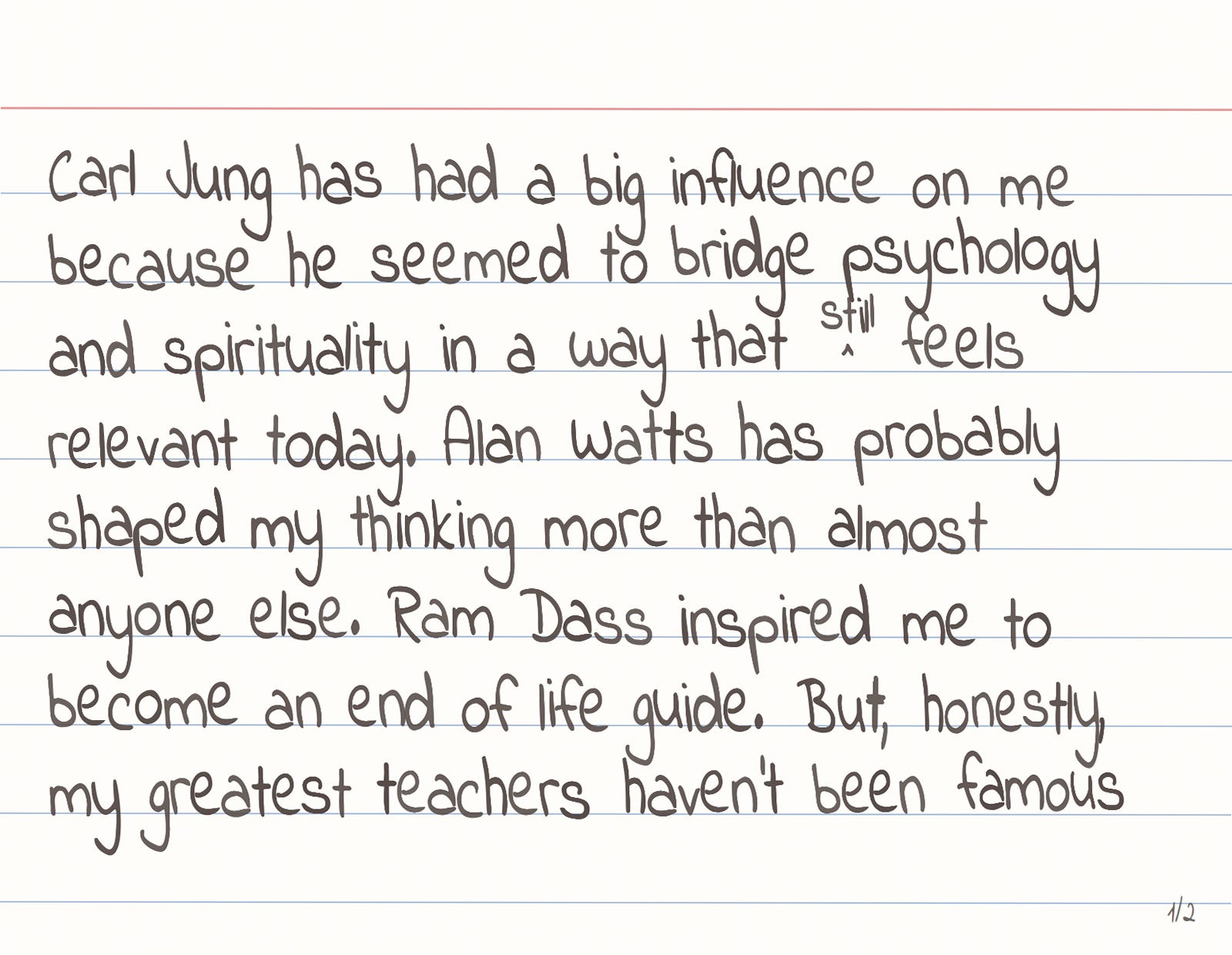
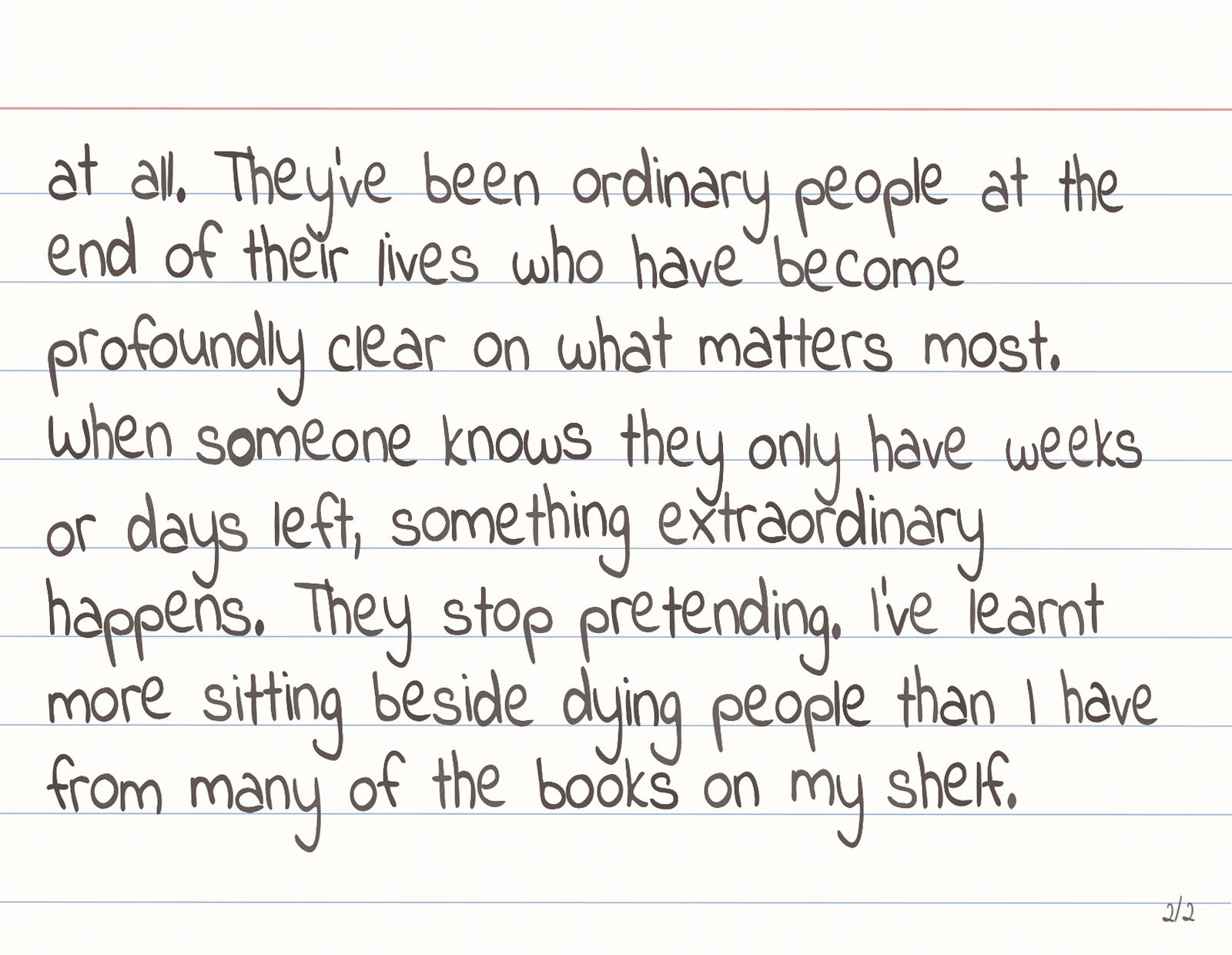
Your Famous Last Words series keeps company with Mary Oliver and Bob Marley. Who else lives in your creative family tree? The writers, teachers, or ancestors you feel you came from.
Carl Jung has had a big influence on me because he seemed to bridge psychology and spirituality in a way that still feels relevant today. Alan Watts has probably shaped my thinking more than almost anyone else. Ram Dass inspired me to become an end of life guide. But, honestly, my greatest teachers haven’t been famous at all. They’ve been ordinary people at the end of their lives who have become profoundly clear on what matters most. When someone knows they only have weeks or days left, something extraordinary happens. They stop pretending. I’ve learnt more sitting beside dying people than I have from many of the books on my shelf.
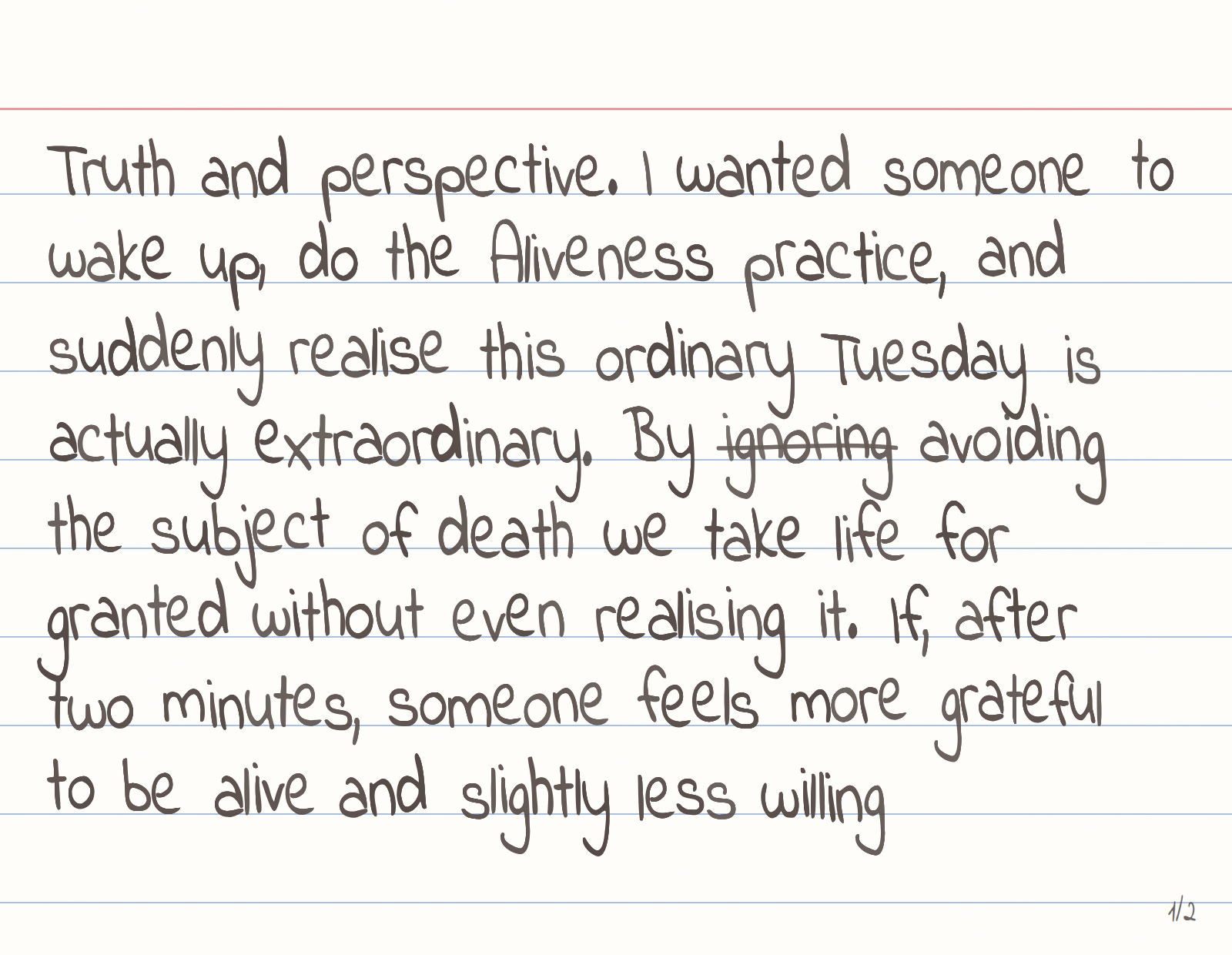
This June you released the six-part Aliveness Practice, two minutes a day. What did you want a person to feel on the first morning they tried it?
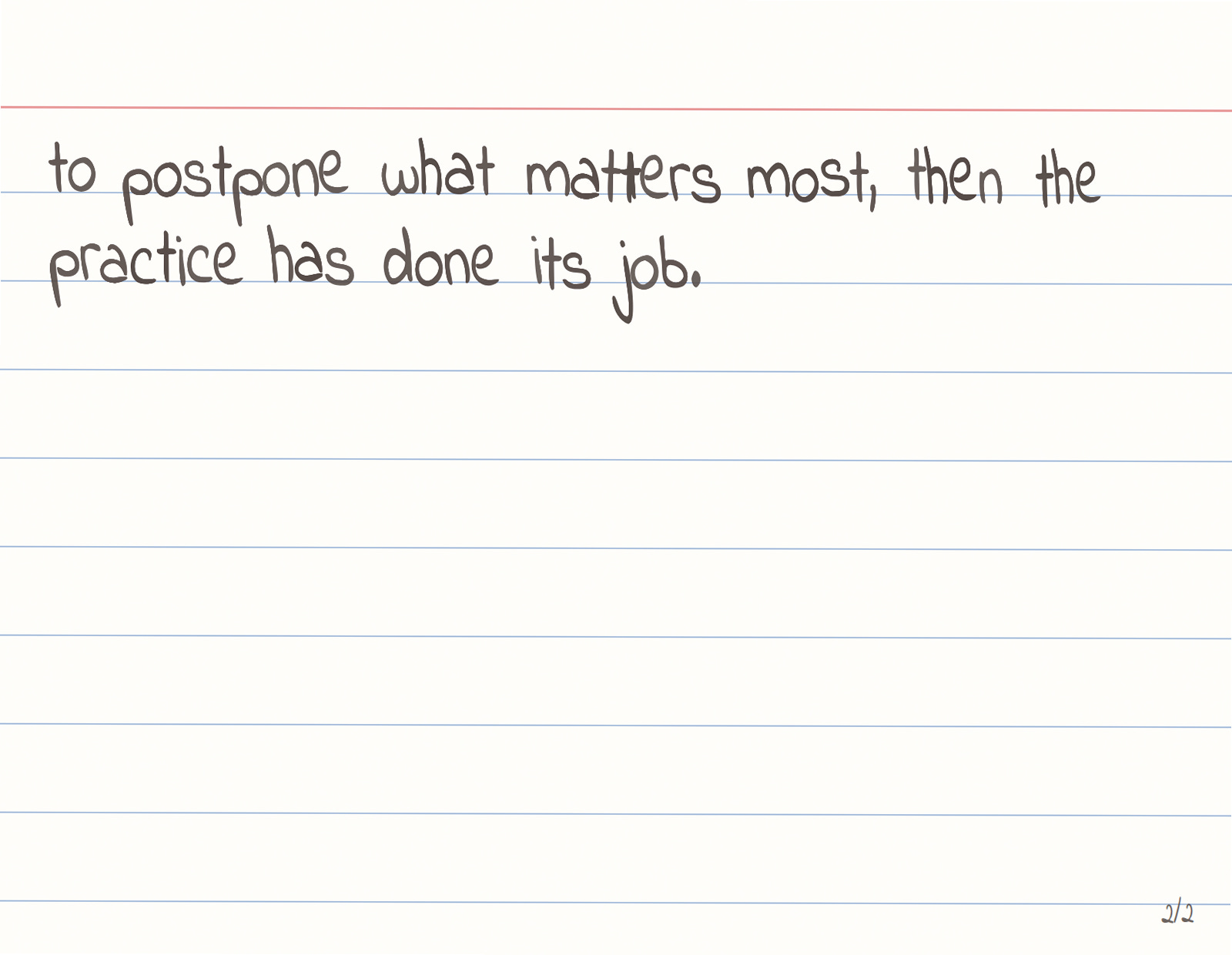
Truth and perspective. I wanted someone to wake up, do the Aliveness practice, and suddenly realise this ordinary Tuesday is actually extraordinary. By avoiding the subject of death we take life for granted without even realising it. If, after two minutes, someone feels more grateful to be alive and slightly less willing to postpone what matters most, then the practice has done its job.
You wrote that Mary Oliver answered death’s question forty years before it arrived, and most of us are still avoiding it. When did you first stop avoiding it in your own life?
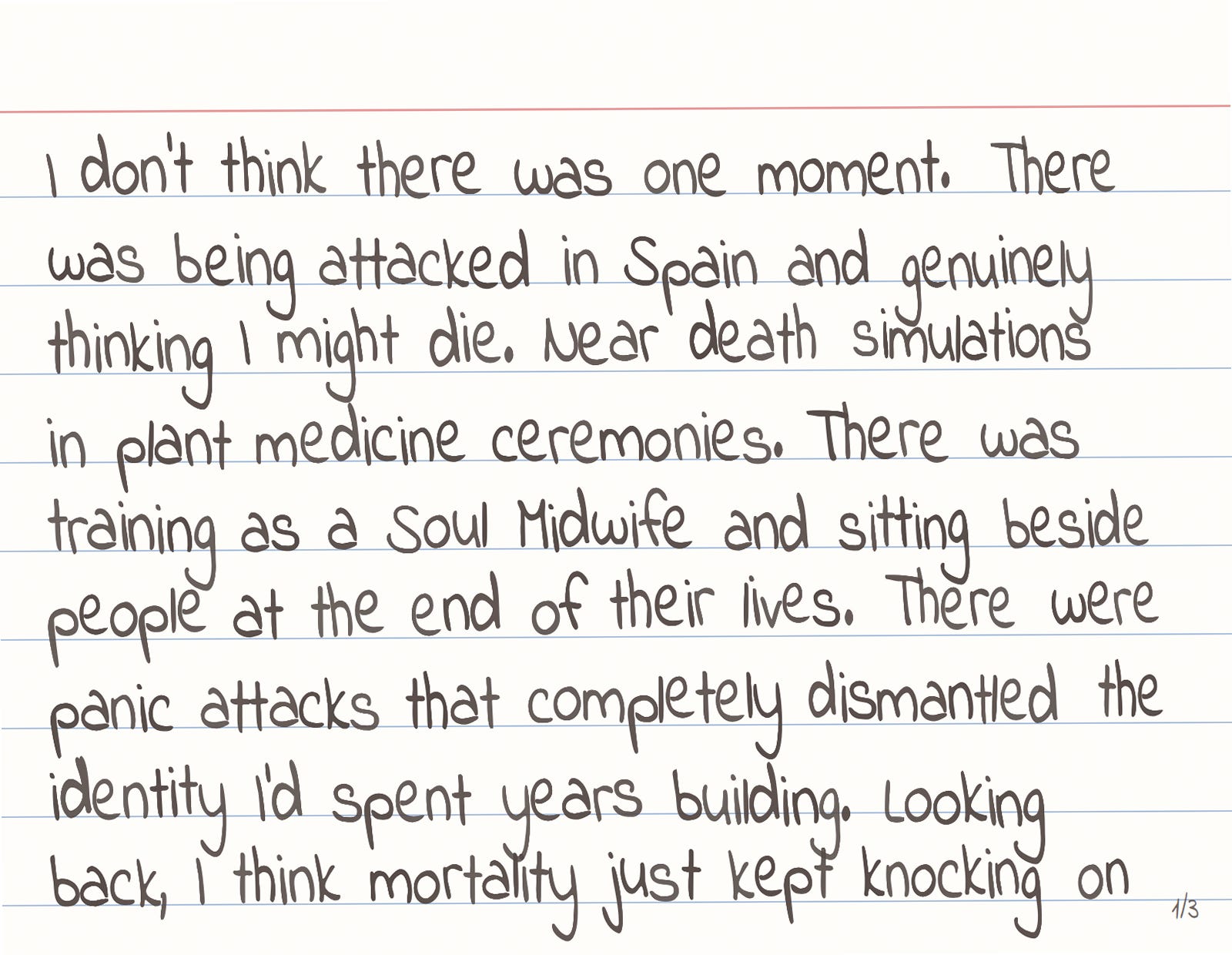
I don’t think there was one moment. There was being attacked in Spain and genuinely thinking I might die. Near death simulations in plant medicine ceremonies. There was training as a Soul Midwife and sitting beside people at the end of their lives. There were panic attacks that completely dismantled the identity I’d spent years building.
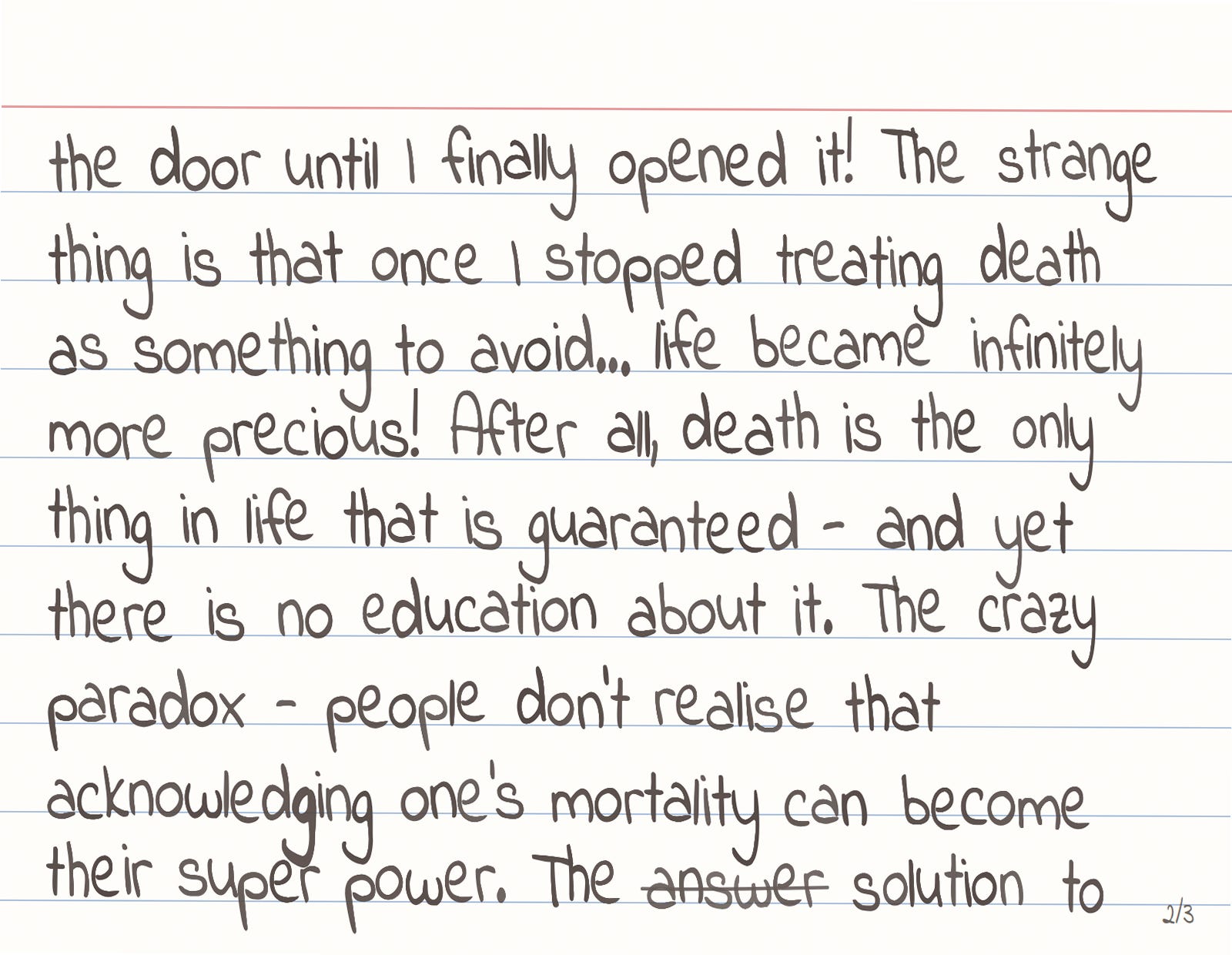
Looking back, I think mortality just kept knocking on the door until I finally opened it! The strange thing is that once I stopped treating death as something to avoid… life became infinitely more precious! After all, death is the only thing in life that is guaranteed - and yet there is no education about it.
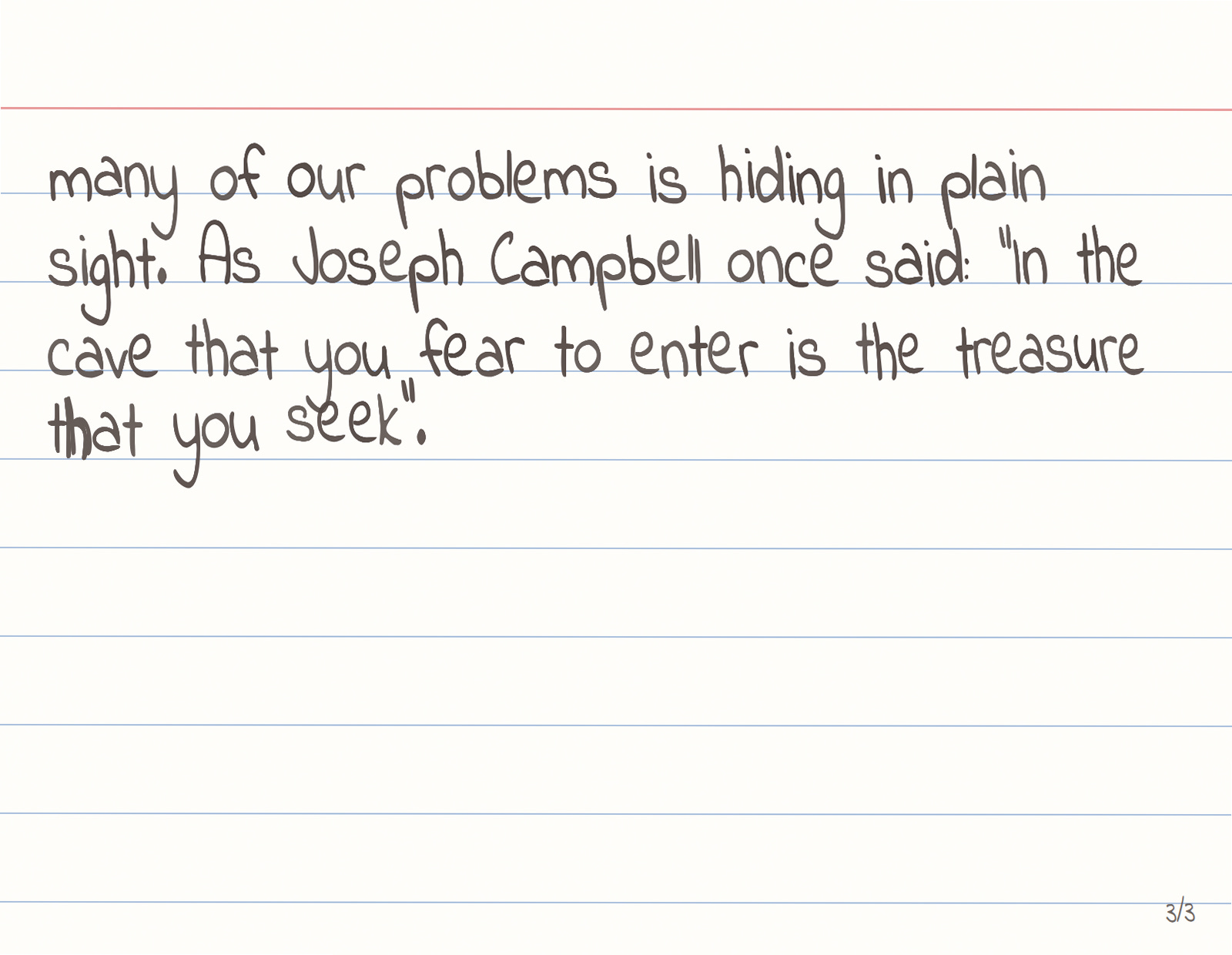
The crazy paradox - people don’t realise that acknowledging one’s mortality can become their super power. The solution to many of our problems is hiding in plain sight. As Joseph Campbell once said: “In the cave that you fear to enter is the treasure that you seek”.
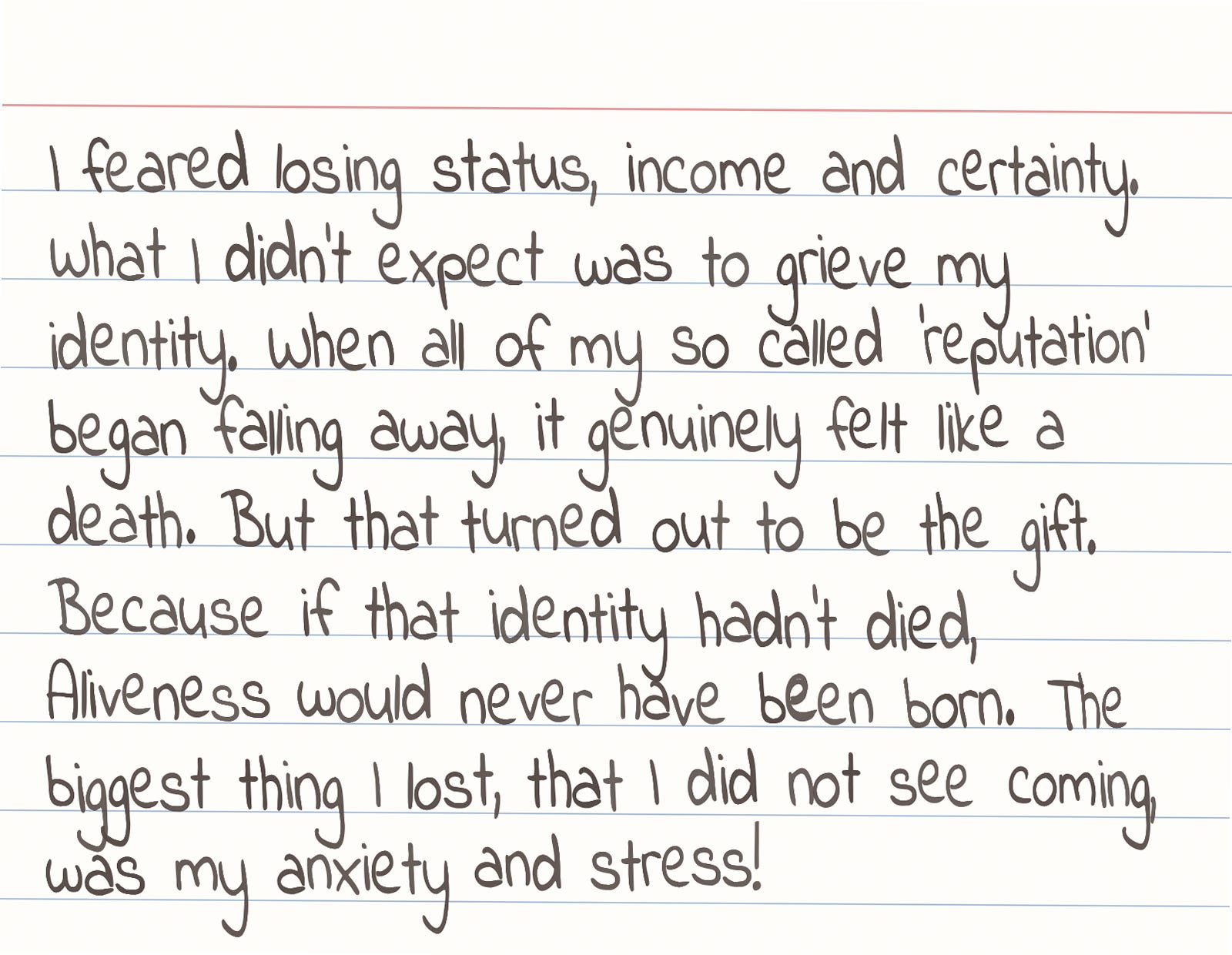
In your mid-forties the panic attacks came and you started taking your life apart. You had the CEO title, a creative reputation, a company you built. When you set that down, what did you expect to lose, and what did you lose that you did not see coming?
I feared losing status, income and certainty. What I didn’t expect was to grieve my identity.
When all of my so called ‘reputation’ began falling away, it genuinely felt like a death. But that turned out to be the gift. Because if that identity hadn’t died, Aliveness would never have been born. The biggest thing I lost, that i did not see coming, was my anxiety and stress!
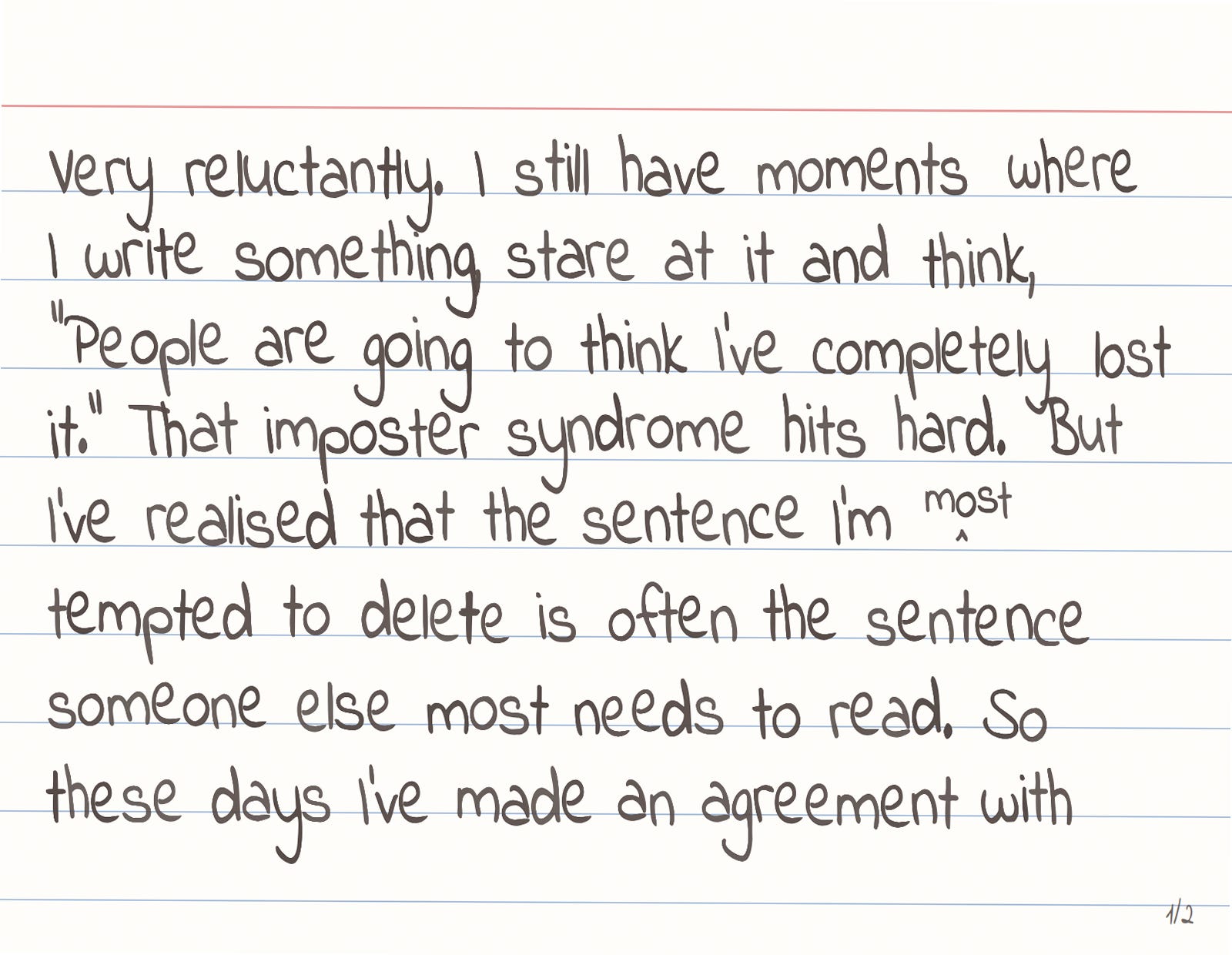
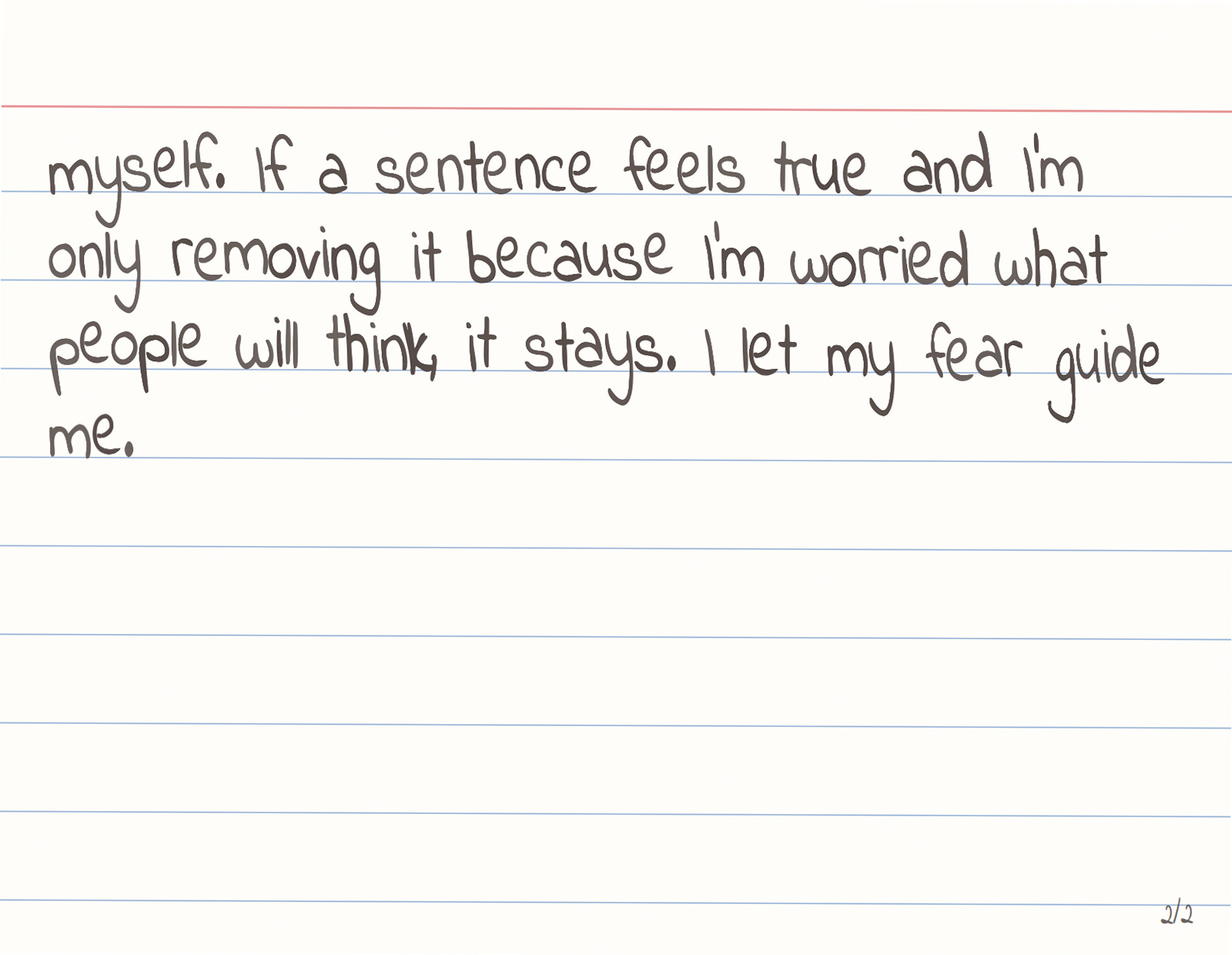
You wrote that launching this newsletter left you crying part of a day, not from sadness but from fear of being judged. How do you write the vulnerable sentence anyway, the one you know will make someone think you are crazy?
Very reluctantly. I still have moments where I write something, stare at it and think, “People are going to think I’ve completely lost it.” That imposter syndrome hits hard. But I’ve realised that the sentence I’m most tempted to delete is often the sentence someone else most needs to read.
So these days I’ve made an agreement with myself. If a sentence feels true and I’m only removing it because I’m worried what people will think, it stays. I let my fear guide me.
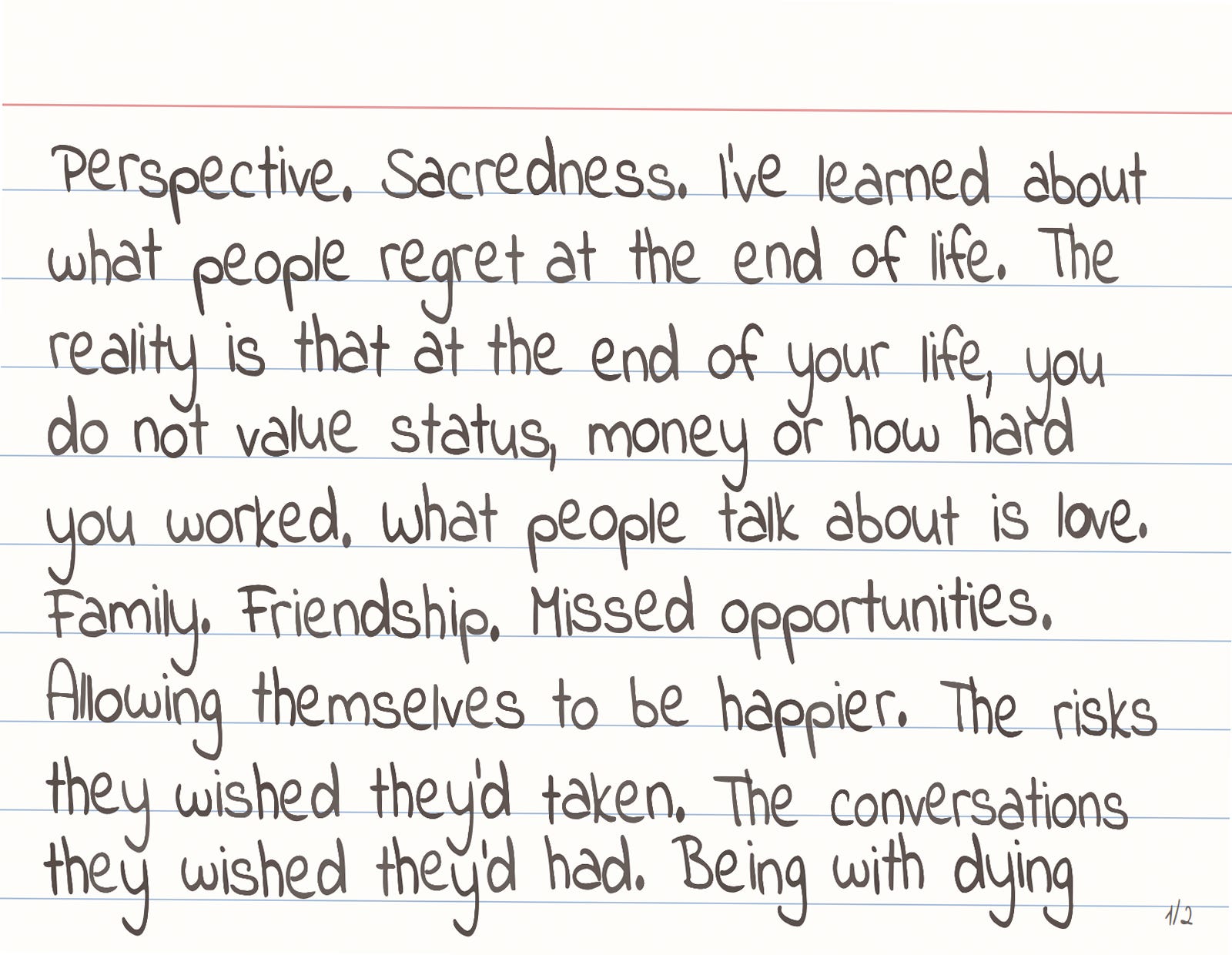
You trained as a soul midwife and sat with people as they died. What has a dying person shown you that you could not have learned any other way?
Perspective. Sacredness. I’ve learned about what people regret at the end of life. The reality is that at the end of your life, you do not value status, money or how hard you worked.
What people talk about is love. Family. Friendship. Missed opportunities. Allowing themselves to be happier. The risks they wished they’d taken. The conversations they wished they’d had.
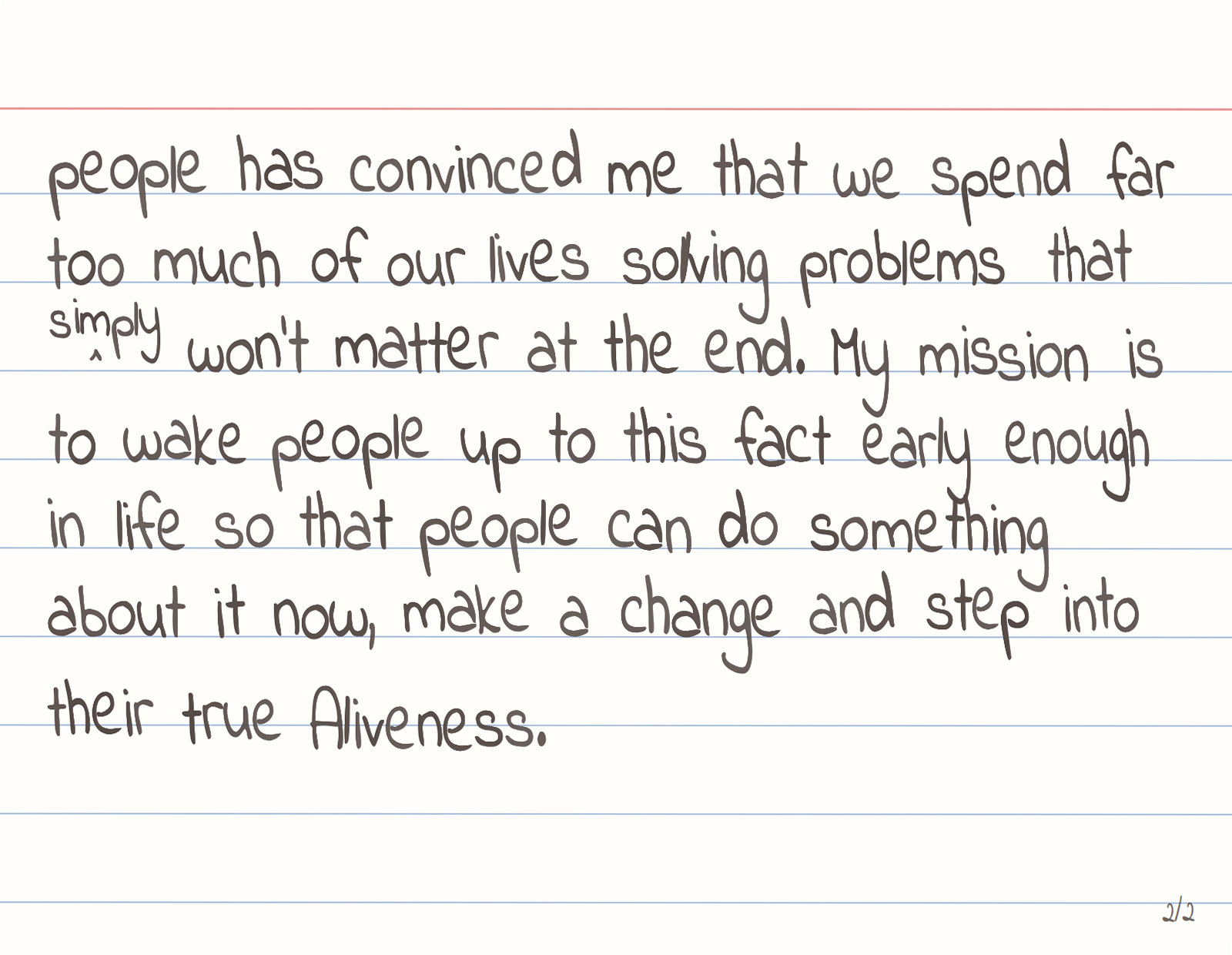
Being with dying people has convinced me that we spend far too much of our lives solving problems that simply won’t matter at the end.
My mission is to wake people up to this fact early enough in life so that people can do something about it now, make a change and step into their true Aliveness.
You reverse engineered your life from how you wanted to feel at ninety. When you first ran that, what surfaced that surprised you? What did the ninety-year-old want that the CEO would have argued with?
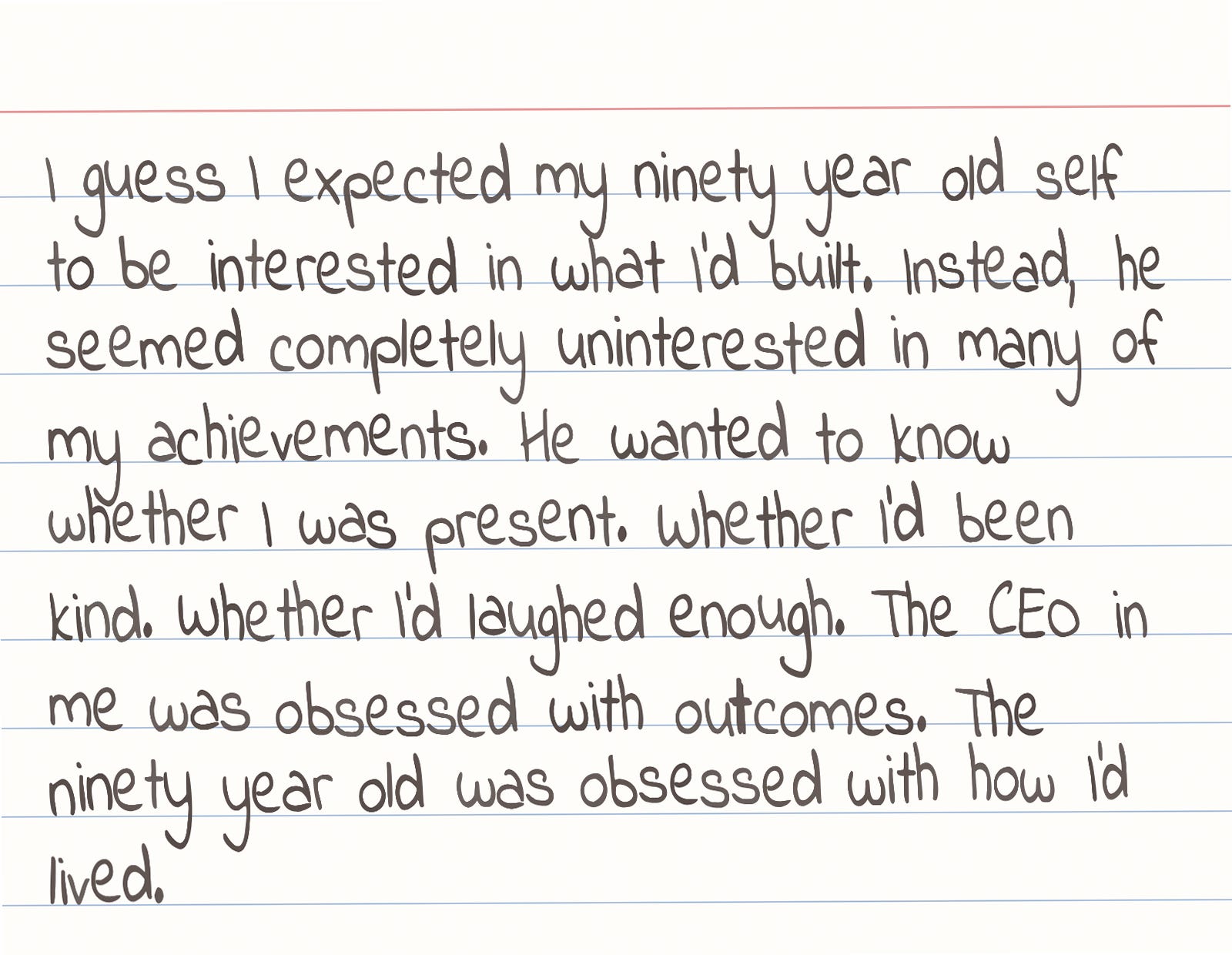
I guess I expected my ninety year old self to be interested in what I’d built. Instead, he seemed completely uninterested in many of my achievements.
He wanted to know whether I was present. Whether I’d been kind. Whether I’d laughed enough. The CEO in me was obsessed with outcomes’. The ninety year old was obsessed with how I’d lived.
One of your essays says your ancient ancestors called you to live in a strange town. Tell us about that town, and the moment you knew you were meant to be there.
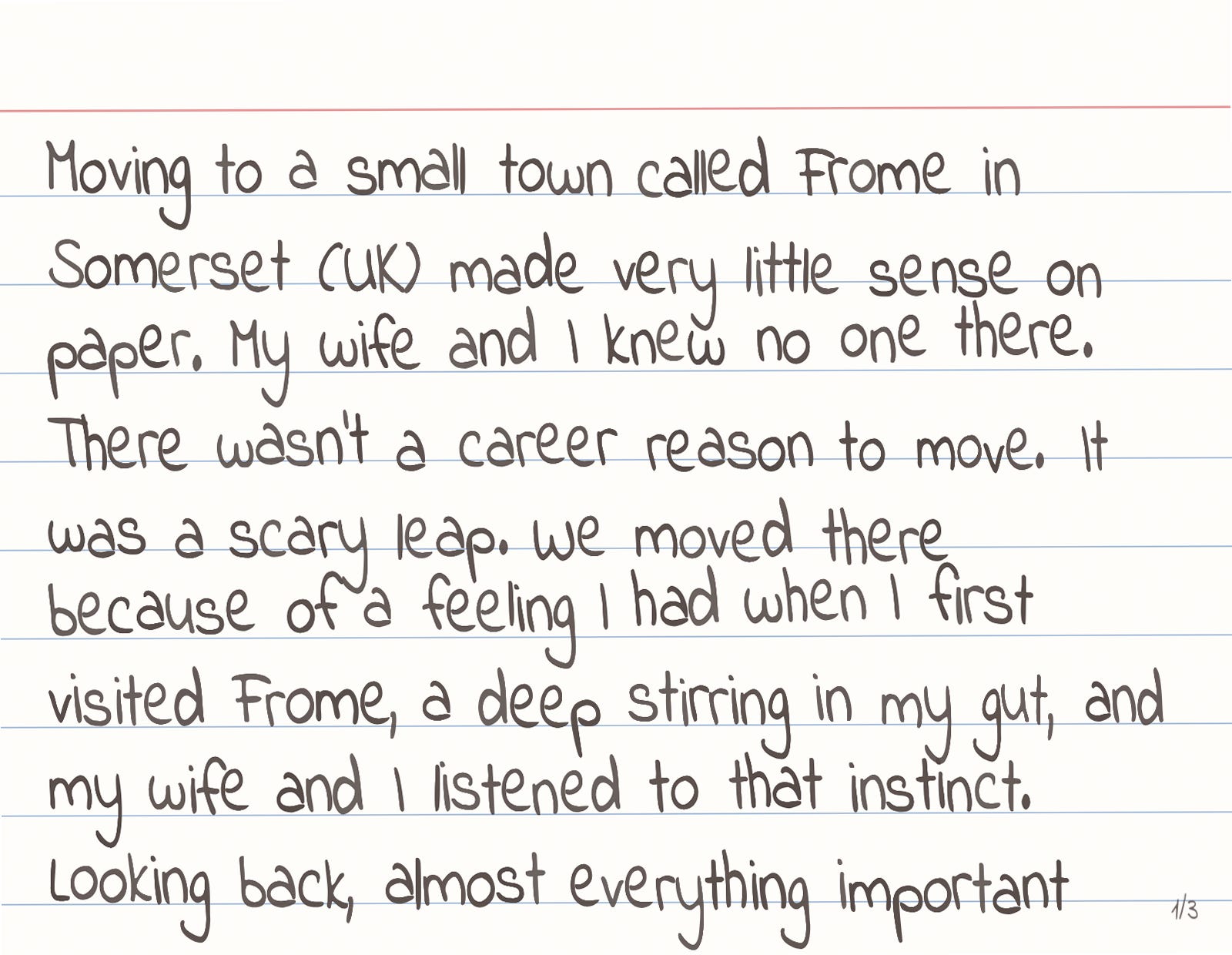
Moving to a small town called Frome in Somerset (UK) made very little sense on paper. My wife and I knew no one there. There wasn’t a career reason to move. It was a scary leap.
We moved there because of a feeling I had when I first visited Frome, a deep stirring in my gut, and my wife and I listened to that instinct.
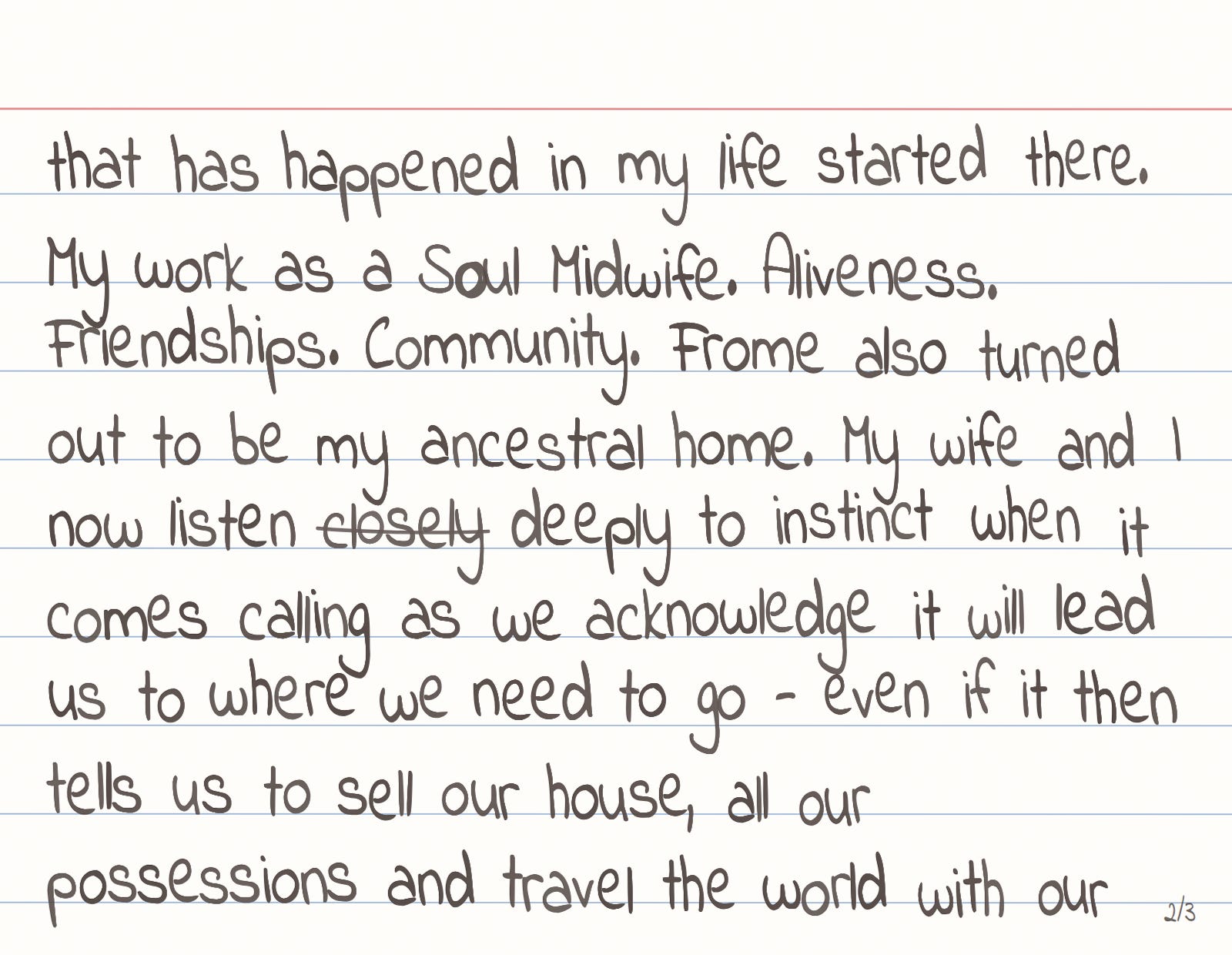
Looking back, almost everything important that has happened in my life started there. My work as a Soul Midwife. Aliveness. Friendships. Community. Frome also turned out to be my ancestral home.
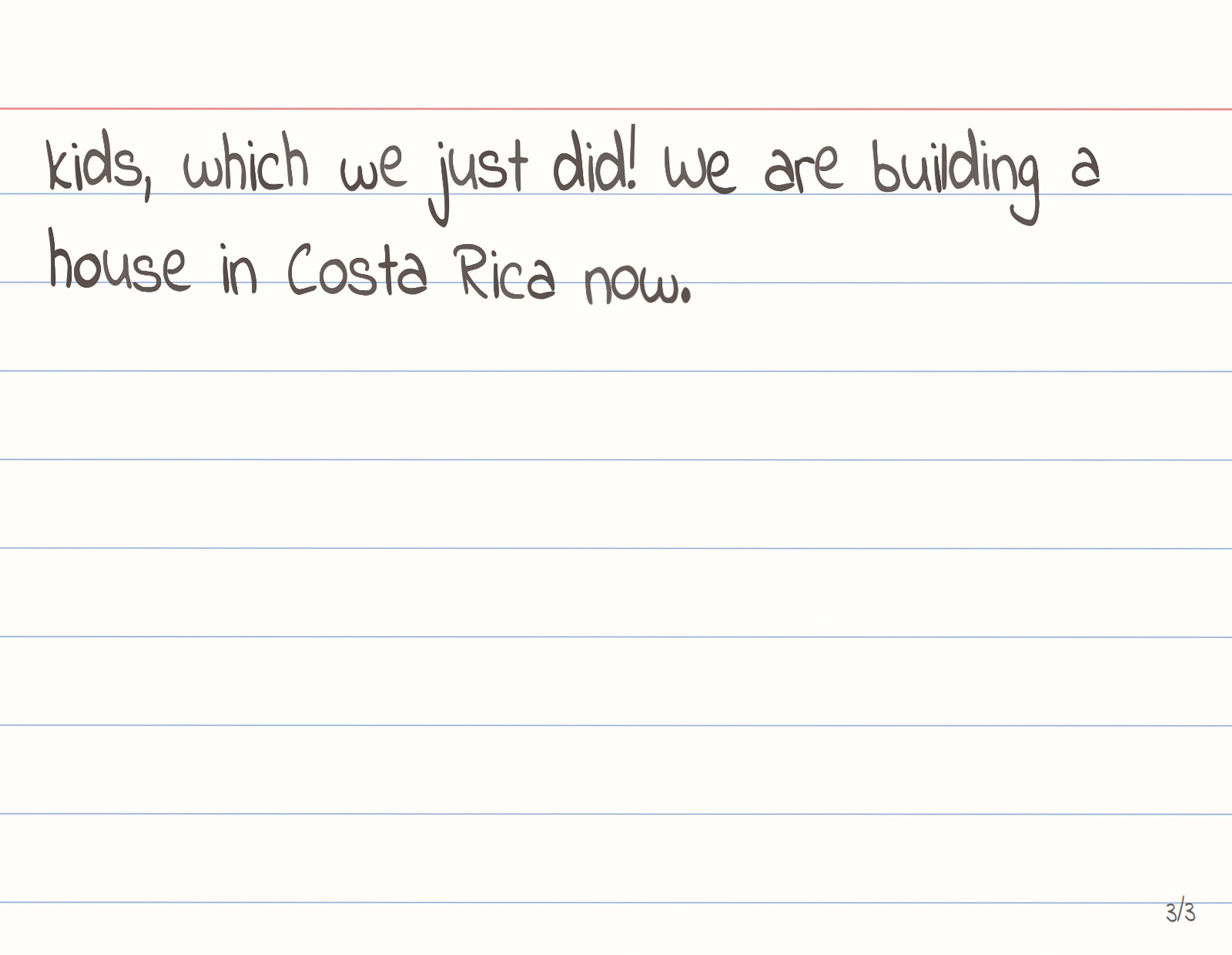
My wife and I now listen deeply to instinct when it comes calling as we acknowledge it will lead us to where we need to go - even if it then tells us to sell our house, all our possessions and travel the world with our kids, which we just did! We are building a house in Costa Rica now.
You have built the practice, the eight questions, the AI tools Reverstory and LivePurpose. What are you making now that you can only half-see, the thing still on the bench?
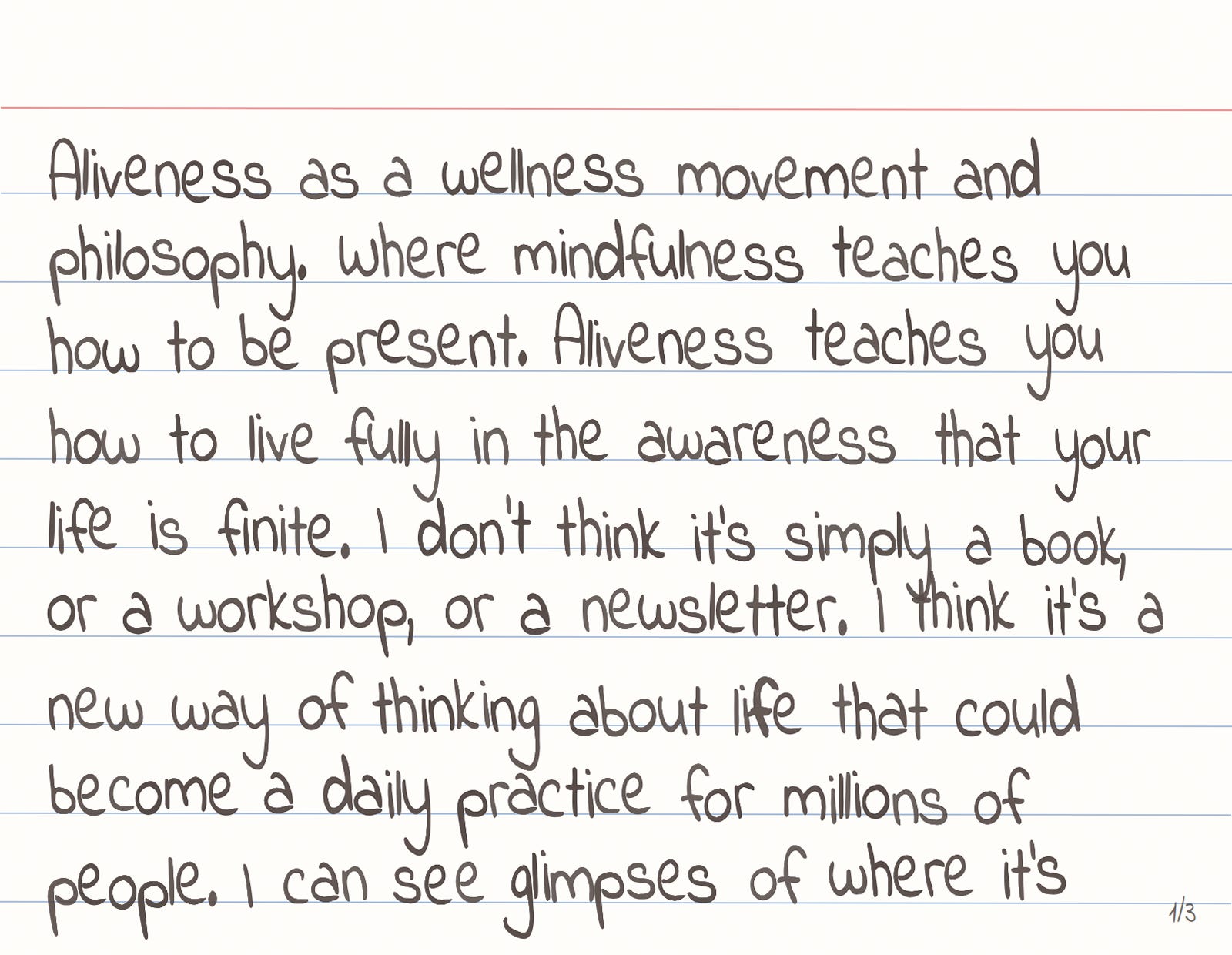
Aliveness as a wellness movement and philosophy.
Where mindfulness teaches you how to be present. Aliveness teaches you how to live fully in the awareness that your life is finite.
I don’t think it’s simply a book, or a workshop, or a newsletter. I think it’s a new way of thinking about life that could become a daily practice for millions of people.
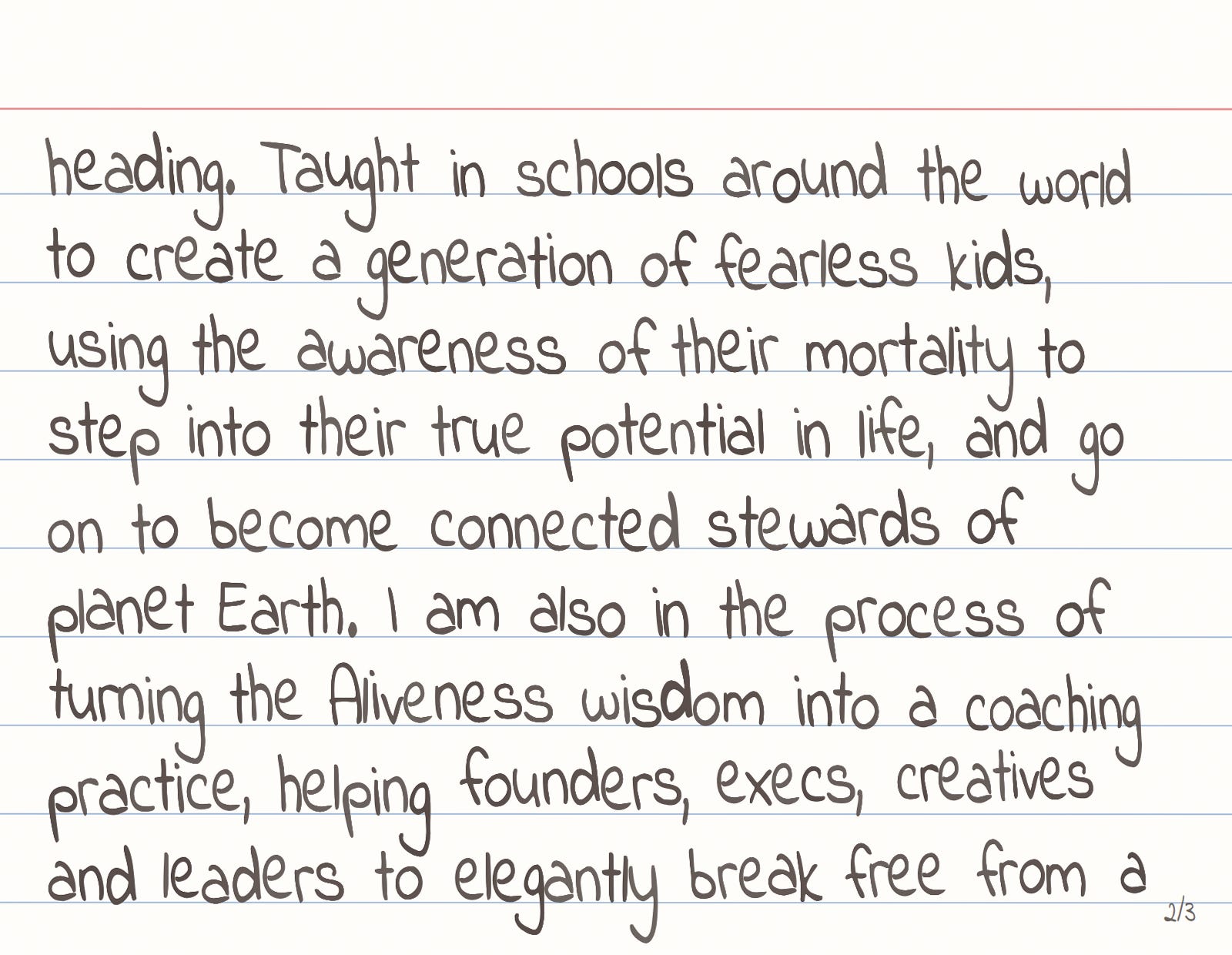
I can see glimpses of where it’s heading. Taught in schools around the world to create a generation of fearless kids, using the awareness of their mortality to step into their true potential in life, and go on to become connected stewards of planet Earth.
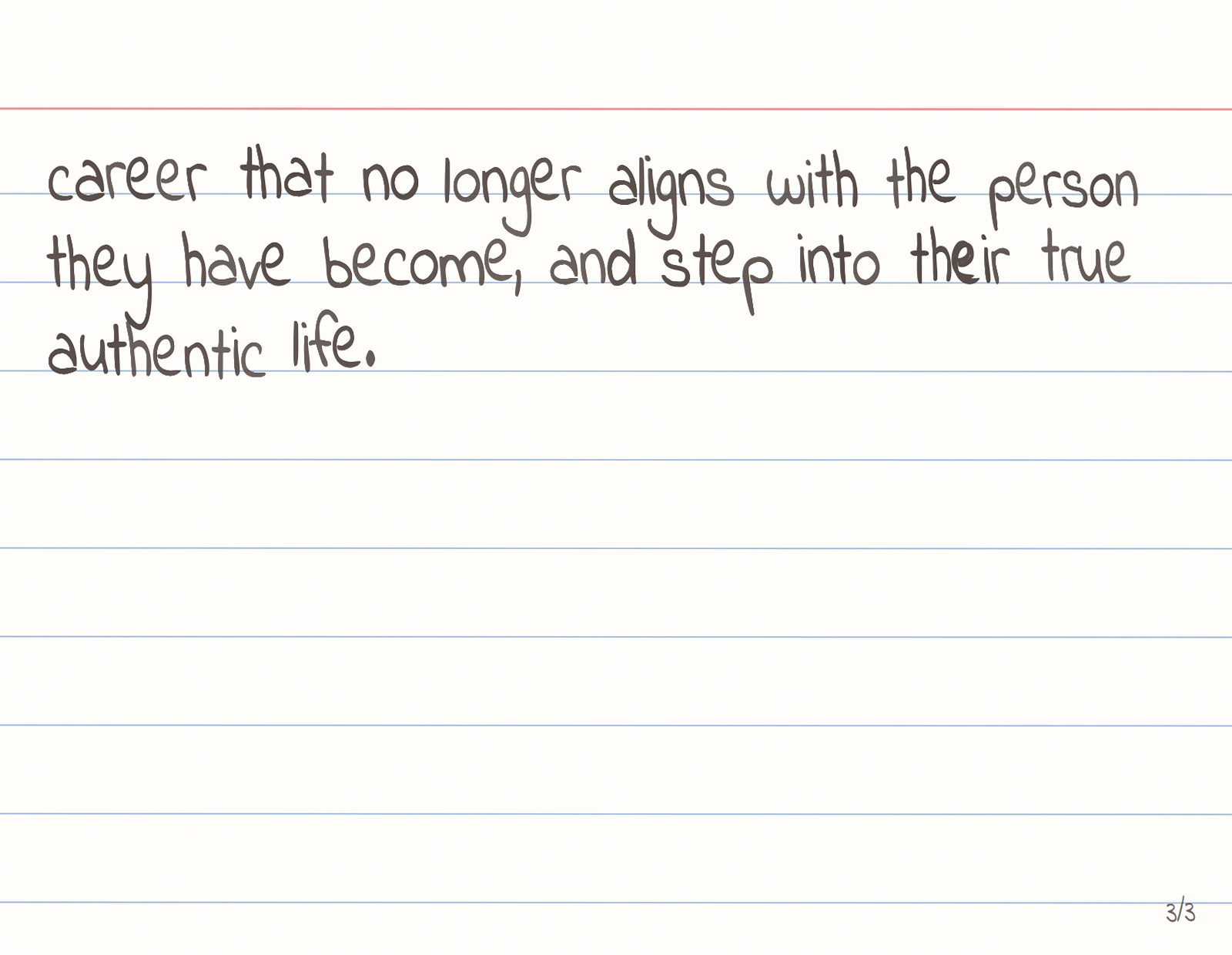
I am also in the process of turning the Aliveness wisdom into a coaching practice, helping founders, execs, creatives and leaders to elegantly break free from a career that no longer aligns with the person they have become, and step into their true authentic life.
What do you know now about living fully that no one could have told you, that you had to live your way into?
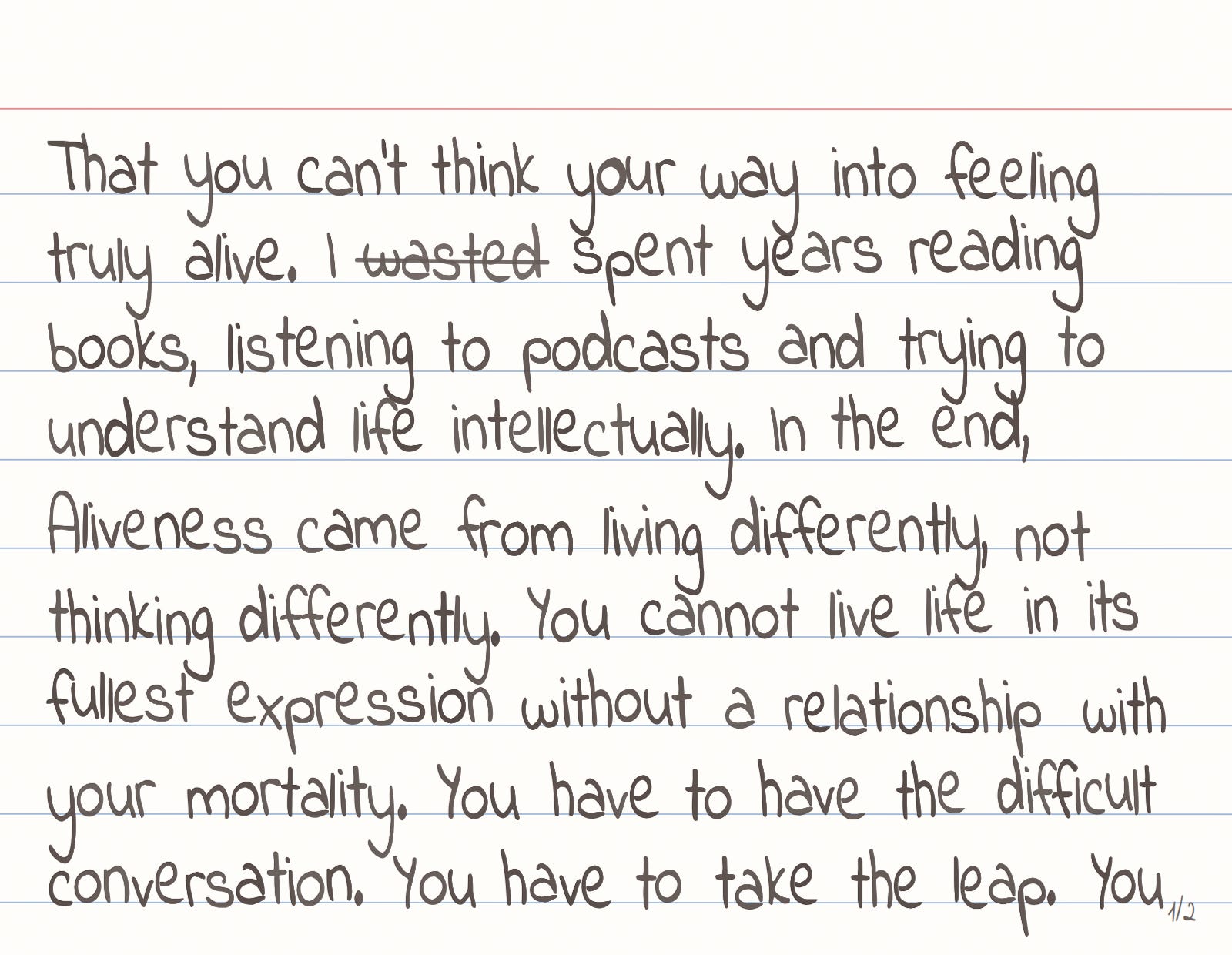
That you can’t think your way into feeling truly alive. I spent years reading books, listening to podcasts and trying to understand life intellectually.
In the end, Aliveness came from living differently, not thinking differently.
You cannot live life in its fullest expression without a relationship with your mortality.
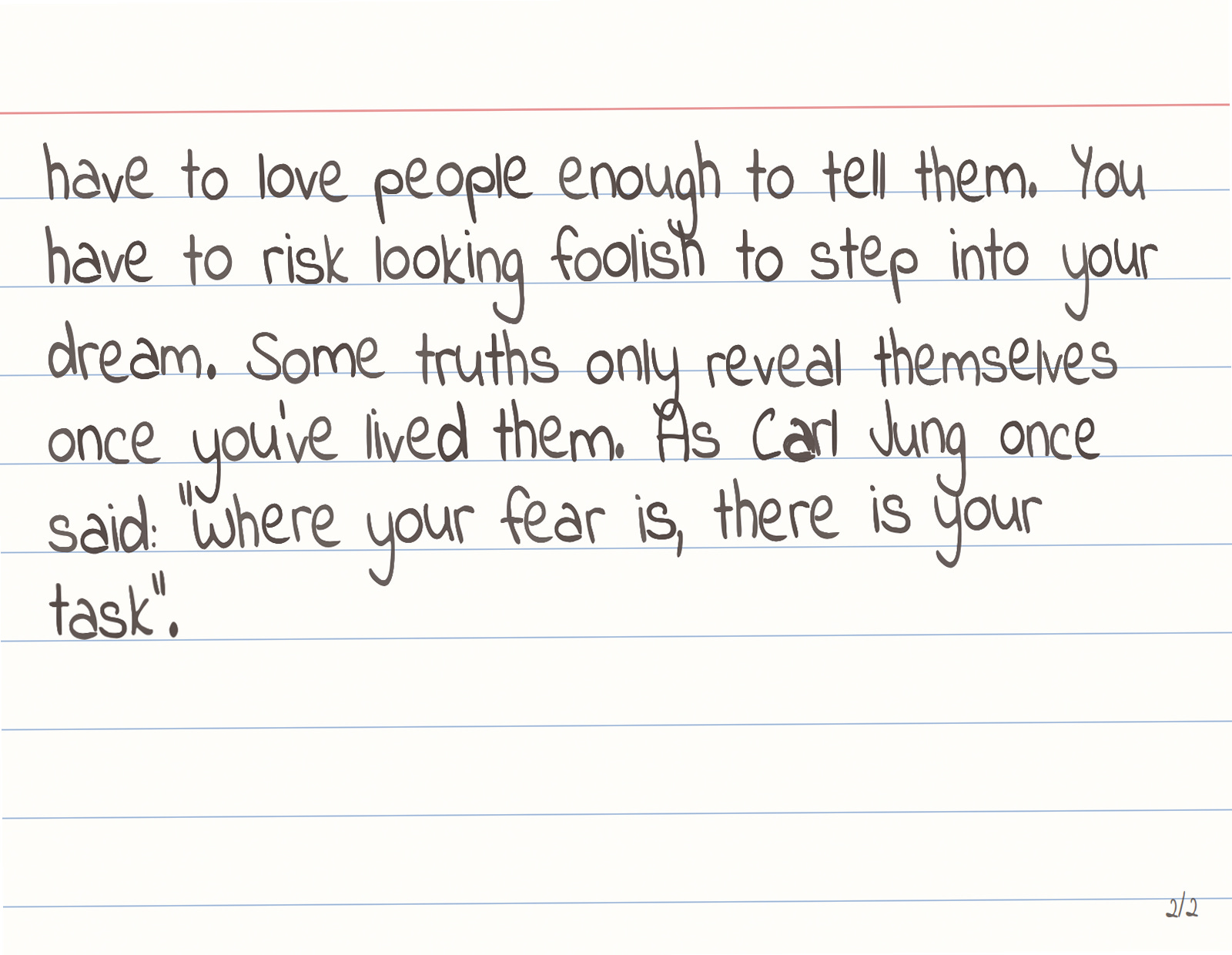
You have to have the difficult conversation. You have to take the leap. You have to love people enough to tell them. You have to risk looking foolish to step into your dream. Some truths only reveal themselves once you’ve lived them.
As Carl Jung once said: “Where your fear is, there is your task”.
Great article Kevin ... brilliant format too... thank you and I hope to connect again soon.
I had a semi-good idea today.
When I publish one of these 3x5 interviews, post the first comment with this question:
"What was your favorite question and why?"
a) it allows us to learn even more about the interviewee.
b) it will help me shape future questions (I want to get really, really good at this).
Since John's already published, I figured I'd comment here.
Can't wait to see what you share!