
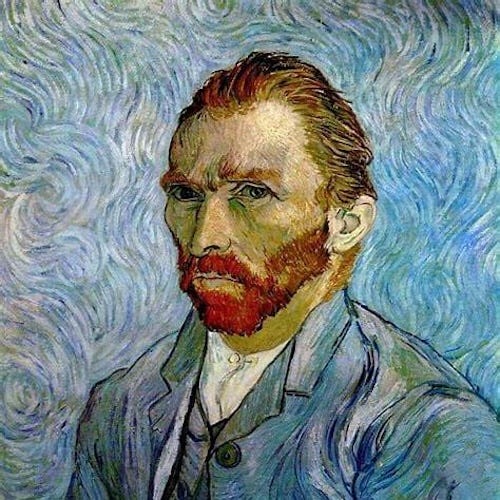
Van Gogh could have been rich.
His brother literally ran an art gallery.
But Vincent chose poverty over performance.
Here's why that choice made him immortal.
Most people know Van Gogh sold one painting during his lifetime.
What they don't know?
His brother Theo was one of Paris's most successful art dealers.
Had connections.
Had buyers.
Had everything Vincent needed to "make it."
Vincent refused.
Not out of pride.
Not out of madness.
Out of clarity.
He understood something that took me years to learn:
The market rewards performance. Your legacy rewards truth.
The Arles Period
In February 1888, Van Gogh did what many executive dream of at 3am.
He left Paris.
He left the “rat race.”
Not for another opportunity.
Not for better connections.
For isolation.
He rented a yellow house in Arles, an isolated town in southern France.
No galleries.
No critics.
No audience.
Just him and the work.
In 18 months, he produced 200 paintings.
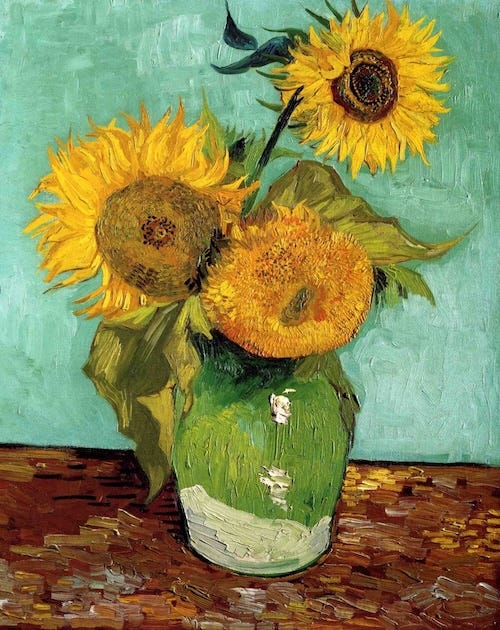
The Sunflowers.
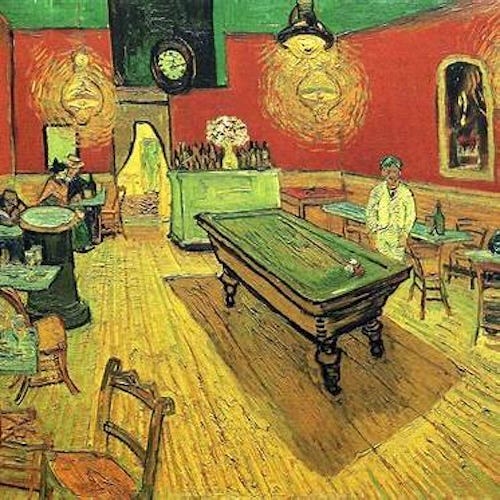
The Night Café.
The Bedroom.
Works that would later sell for hundreds of millions.
Created in complete obscurity.
My friend, are you reading this from your corner office?
The one with the view you don't even notice anymore?
Are you're performing for an audience you stopped caring about years ago?
Van Gogh's Arles period wasn't an escape.
It was a reckoning.
When you stop performing for applause, you start creating for eternity.
The Yellow House
Van Gogh had this dream.
A colony of artists.
Working together.
Creating without compromise.
He prepared rooms.
Bought furniture.
Painted those famous sunflowers to decorate Gauguin's bedroom.
Gauguin lasted two months.
Here's what nobody tells you about transformation:
You'll romanticize community.
You'll crave witnesses to your journey.
You'll prepare rooms for people who won't stay.
The quietly ambitious know this truth:
Your best work happens in the gap between who shows up and who you thought would be there.
Van Gogh painted his masterpieces for a community that never came.
Just like you're building something for a future that hasn't arrived yet.
The difference?
He kept painting.
The Ear Incident
December 23, 1888.
The night that defined Van Gogh in popular culture.
While no one will ever know exactly what happened, I have a thought…
Gauguin was leaving.
The dream was dying.
The performance was over.
What if, instead of reducing Van Gogh’s severing his ear to complete madness…
we use it as a metaphor for a moment driven by clarity?
When you refuse to perform, society calls you crazy.
When you choose authenticity over acceptance, they pathologize your passion.
I've watched executives get labeled "difficult" for refusing to play politics.
"Unrealistic" for maintaining standards.
"Crazy" for walking away from seven figures.
Van Gogh's ear doesn’t have to be summed up as a moment of insanity.
It can also represent the price of refusing to negotiate with your genius.
You know that price.
You pay it every time you choose truth over comfort.
Every time you say what needs to be said.
Every time you create what needs to exist.
Even when it comes with a cost.
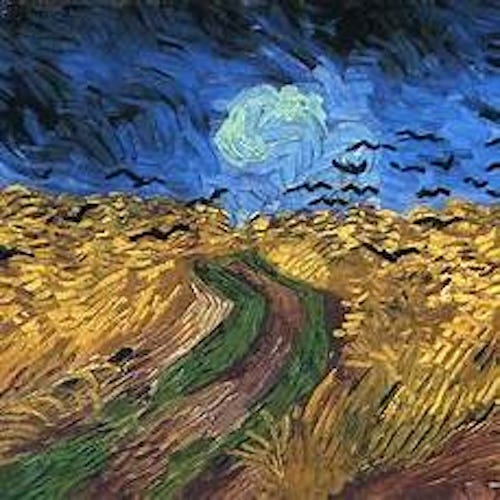
The Final Burst
May 1890. Van Gogh moves to Auvers-sur-Oise.
70 paintings in 70 days.
Including "Wheatfield with Crows" - his last masterpiece.
This is what happens when you stop negotiating:
The work pours out.
Not because you're manic.
Because you're finally aligned.
No more meetings about meetings.
No more consensus building.
No more PowerPoints pretending to be strategy.
Just you and the work that only you can do.
The quietly ambitious understand this timeline:
Years of preparation.
Months of focus.
Weeks of pure creation.
Then done.
Not burned out.
Complete.
The Modern Translation
You're reading this because you're tired of performing.
Tired of translating your genius into corporate speak.
Tired of pretending your best ideas fit in a quarterly review.
Tired of applauding work that wouldn't survive a gallery wall.
Here's your Van Gogh moment:
1. Stop auditioning for roles you've outgrown
That next VP title?
Another performance.
That board seat?
Another audience.
That "strategic initiative"?
Another compromise.
2. Choose your Arles
Not necessarily physical isolation.
But psychological sovereignty.
Where can you work without translation?
Where can you create without committee?
Where can you build without permission?
3. Accept the Gauguin Reality
People will promise to join your vision.
Some won't last two months.
Build anyway.
4. Embrace the Ear Moment
When you stop performing, they'll question you.
They might call you crazy.
Good.
You’re opening new doors.
The consensus of what was…
doesn’t always accomodate space for what you’re becoming.
5. Plan for the Final Burst
Your best work isn't sustainable.
It's not supposed to be.
It's supposed to be true.
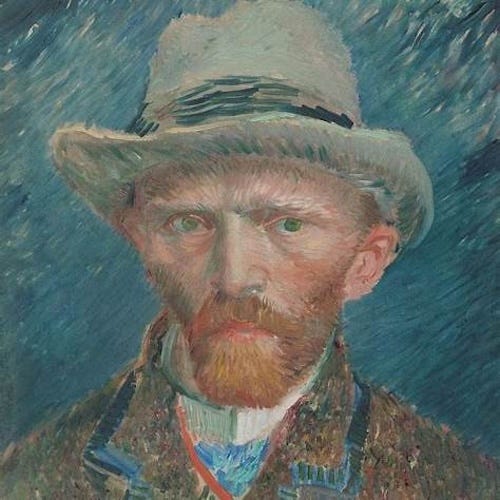
Van Gogh didn't lack talent.
He lacked the willingness to dilute it.
Your Zone of Genius isn't simply what others will pay for.
It's what you can't stop doing.
It’s a reflection of who you are.
It’s where you have impact and purpose.
Even if it doesn’t fit for everyone.
Even if your brother's gallery could have sold it tomorrow.
Even if everyone thinks you're crazy for choosing a path they don’t understand, yet.
Because here's what Van Gogh knew:
The world doesn't need another performer.
It needs someone willing to paint the truth.
You've performed long enough.
Time to paint.
The quietly ambitious don't seek applause. They seek alignment. And sometimes, that alignment may not make sense to those still performing.
And, they are not your audience nor your patrons.
💡 The Van Gogh Mirror "If you had your own 'yellow house' moment—complete freedom to create without an audience—what would you actually make?"
📌 PS - If you found this post helpful, would you please consider restacking it and sharing it with your audience?
This spreads the word and keeps me writing content that will help you create a “quietly ambitious” life.
If you liked this, I think you’ll enjoy these other works…
Not My Boulder. Not My Hill.

I’m Kevin Kermes and this is The Quietly Ambitious. Remember, it’s free to Subscribe and helps me out a lot when you do.
Not My Boulder. Not My Hill.
Picasso's Horse Isn't About Time (It's About Truth)

I’m Kevin Kermes and this is The Quietly Ambitious. Remember, it’s FREE to Subscribe and helps me a lot.
Why Da Vinci Didn't Have a Job Title

I’m Kevin Kermes and this is The Quietly Ambitious. Remember, it’s FREE to Subscribe and helps me a lot.
Why da Vinci Didn’t Have a Job Title (and Neither Should You)
I just reposted your article to my LinkedIn page. Comparing artists to business professionals today was a brilliant move on your part. Lack of succession planning for many businesses is driven by the owners need to continue to perform or the desire for one more _______ (you fill in the blank). Serial entreprenuers can move on, look back at their work, and recognize that their next blank canvas may be their best work yet.
Wow! Amazing story, thank you for sharing.